Record copies / product limits
Using a WhatsApp PDF as a reading copy for legal review
A PDF can make exported messages easier to read. It cannot establish authenticity, completeness or admissibility. Preserve the source and ask your adviser what the relevant process requires.
Reviewed · Threadkeep
Step by step
Ask what record is needed
Before converting, ask the qualified person handling your matter which original records and formats they require. A neatly formatted PDF may be convenient for reading without being sufficient for their process.
Preserve the original source
Keep access to the original conversation and retain the exported transcript, archive and attachments unchanged. Work on a copy when inspecting or formatting files, and record when you made the export.
Review parsing and selection
Compare sender labels, dates and message order with the source. If you change a date range or exclude a participant, disclose that the resulting PDF is selected rather than a complete rendering of the export.
Create a clearly described reading copy
Generate the PDF and check pages around important messages. Keep missing-media warnings and relevant attachments with the source records. Do not describe the conversion as a verification of identity or authenticity.
Share through the agreed channel
Use the recipient's requested delivery method and consider who can access the files. Local conversion does not make email, a shared drive or a public link private. Retain your original copy separately.
A formatted copy is still a copy
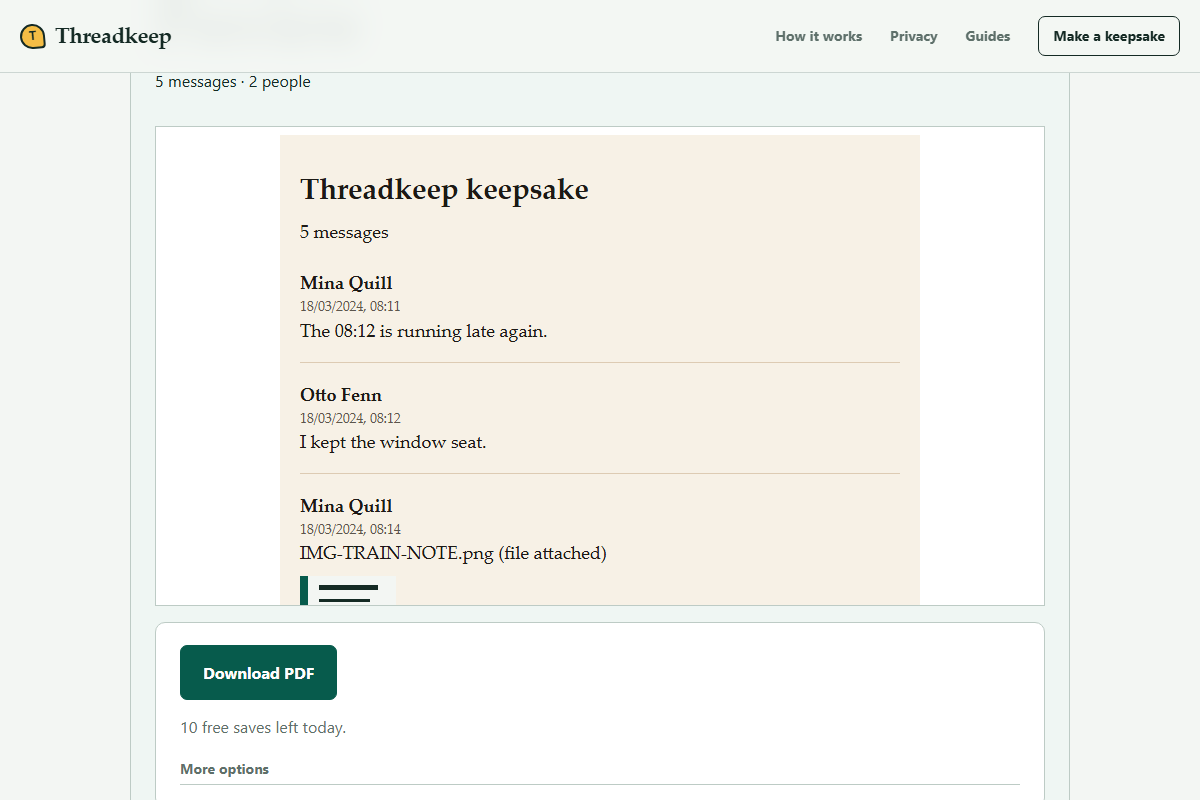
The PDF contains text parsed from the file you selected and supported images that can be matched. It is not a forensic image of a phone, a record retrieved directly from WhatsApp or a statement from the other participant. A familiar name in the document is a label from the source, not an identity check.
The original export itself can be incomplete. A transcript may include an attachment reference without the file, and the sharing destination may omit files. Converting that package does not repair its provenance. Keep the distinction between source records and a convenient reading document explicit.
Dates and context need inspection
Date formats vary between exported chats. Check a date that cannot be confused between month-first and day-first ordering, then compare other relevant exchanges. Do not infer a reliable timezone or legal timestamp interpretation from the visual layout alone.
A single selected message can lose surrounding context. If you use a narrower date range or participant filter, preserve the full source and describe the selection to the recipient. The exporter is designed for readable keepsakes, so it does not enforce a formal evidence-preservation workflow.
Keep media outside the PDF too
Photos included in a PDF may be rendered differently from their original files. Audio, video, documents and unsupported images may need to remain separate. Preserve those originals rather than assuming every attachment is represented by the printable pages.
Do not rename, edit or recompress your only source files to make them fit a converter. If an archive is too large, ask the recipient how to provide the originals and use a reading selection only when appropriate. Keep an untouched copy for comparison.
Protect the conversation when sharing
A private export can contain personal details unrelated to the matter. Consider access controls and the recipient's instructions before transferring it. A PDF created locally can still be exposed by a public folder, an incorrect email recipient or a printing service.
Threadkeep does not provide legal review, notarization, a retention service or authenticated submission. Its terms describe the output limits. For decisions about disclosure, redaction or retention in a particular matter, seek advice specific to that matter.
Questions
Does Threadkeep certify evidence?
No. It formats an export chosen by you. It does not verify a sender's identity, check a device for tampering, establish chain of custody or certify that the export contains every message.
Is a WhatsApp PDF admissible in court?
Threadkeep cannot determine that. Requirements depend on the relevant jurisdiction and process. Ask a qualified legal adviser or the receiving authority what they require.